
Method
From the first bar to the last
Quaverley plans a whole piece, then decides the order. The hard parts come back sooner, the secure parts wait, and every step leaves a record.
7 days free. No card required.
One
The score is measured
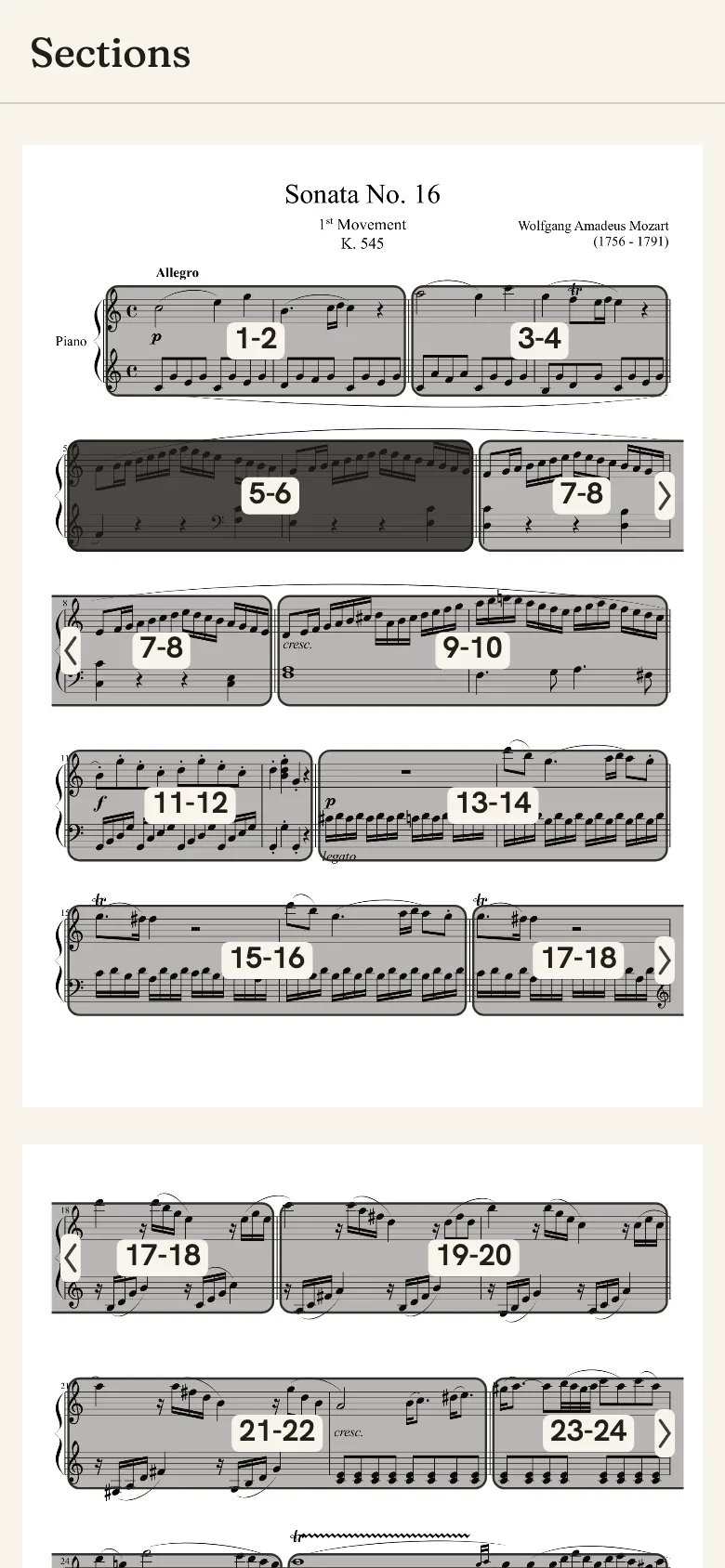
Upload a PDF or clear photographs. The pages are straightened, and each stave is found.
From the staves, the barlines fall into place, and the barlines give the bars. Quaverley then proposes where one practice section ends and the next begins, using the shape of the music, such as a repeat, a double bar or a change of texture. You can change any boundary yourself.
Repeated passages are recognised, so a run you have already learned is not treated as new music when it appears again.
Two
A study plan is set
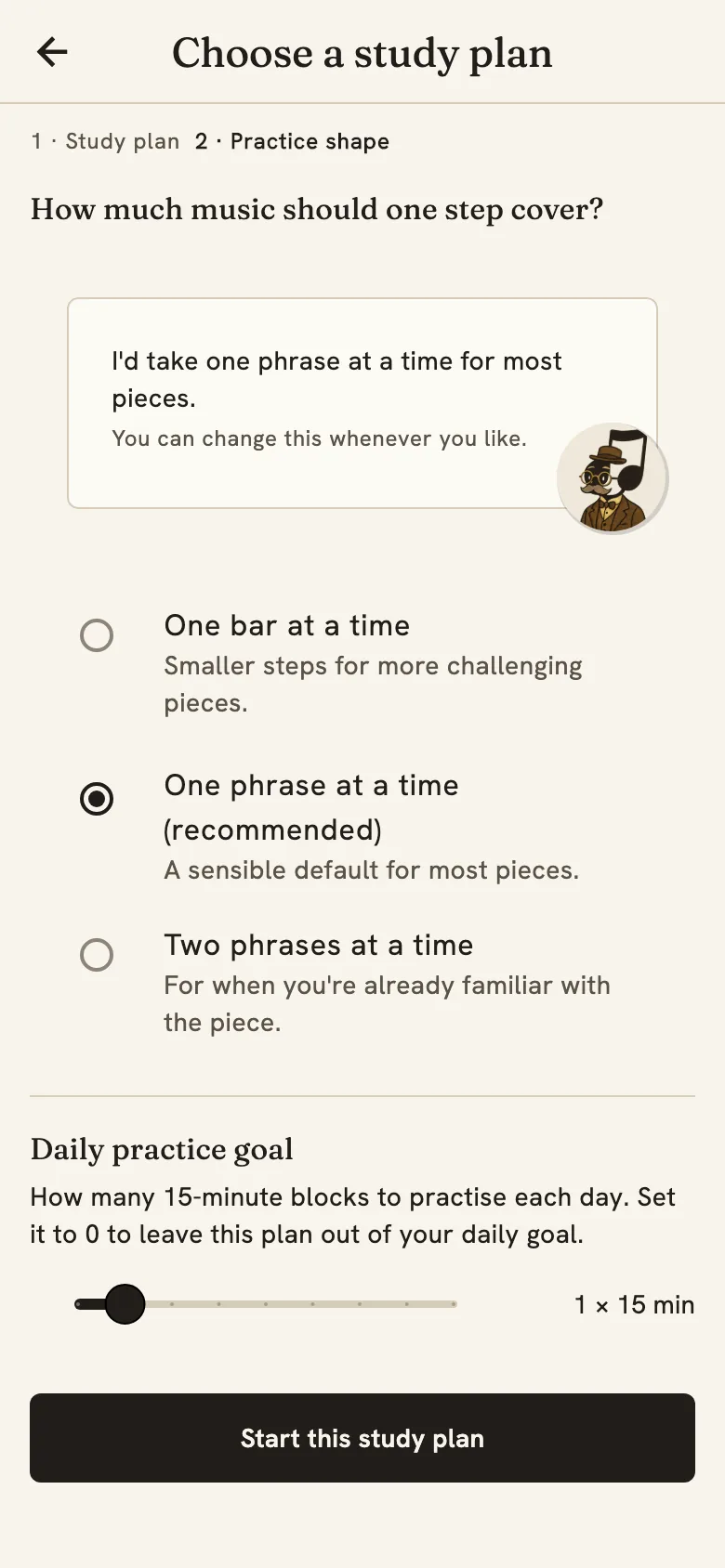
A piece is studied in one of three ways, and the plan follows.
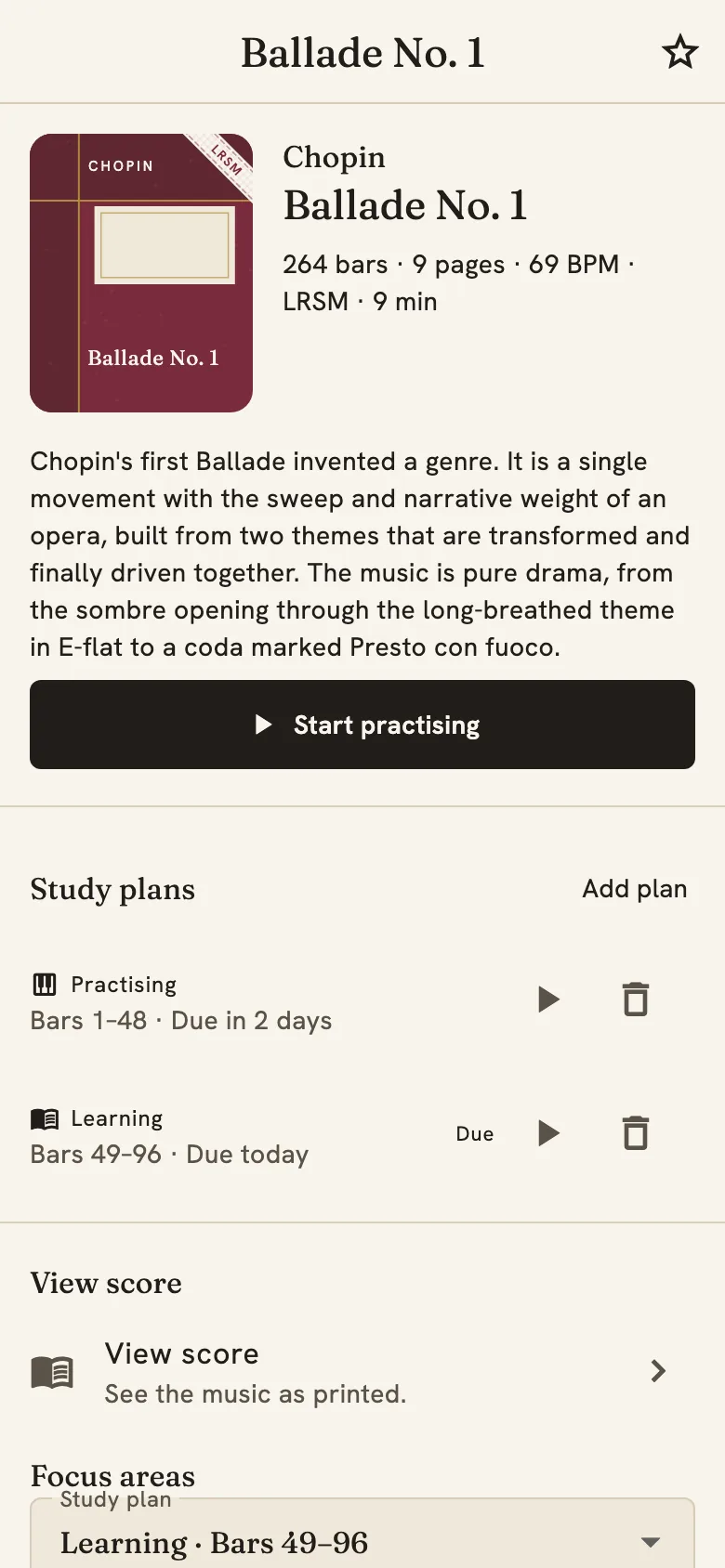
Learning gets to know the notes and plays them evenly. Tempo can wait. Practising builds up to performance tempo, giving the hardest bars extra attention. Refreshing keeps a learned piece in the repertoire by revisiting it regularly.
Learning moves through the piece from the first bar to the last. The plan holds every bar, so nothing is skipped and nothing is left to the last week.
Three
Steps are small
One step covers a phrase or two, unless you choose otherwise.
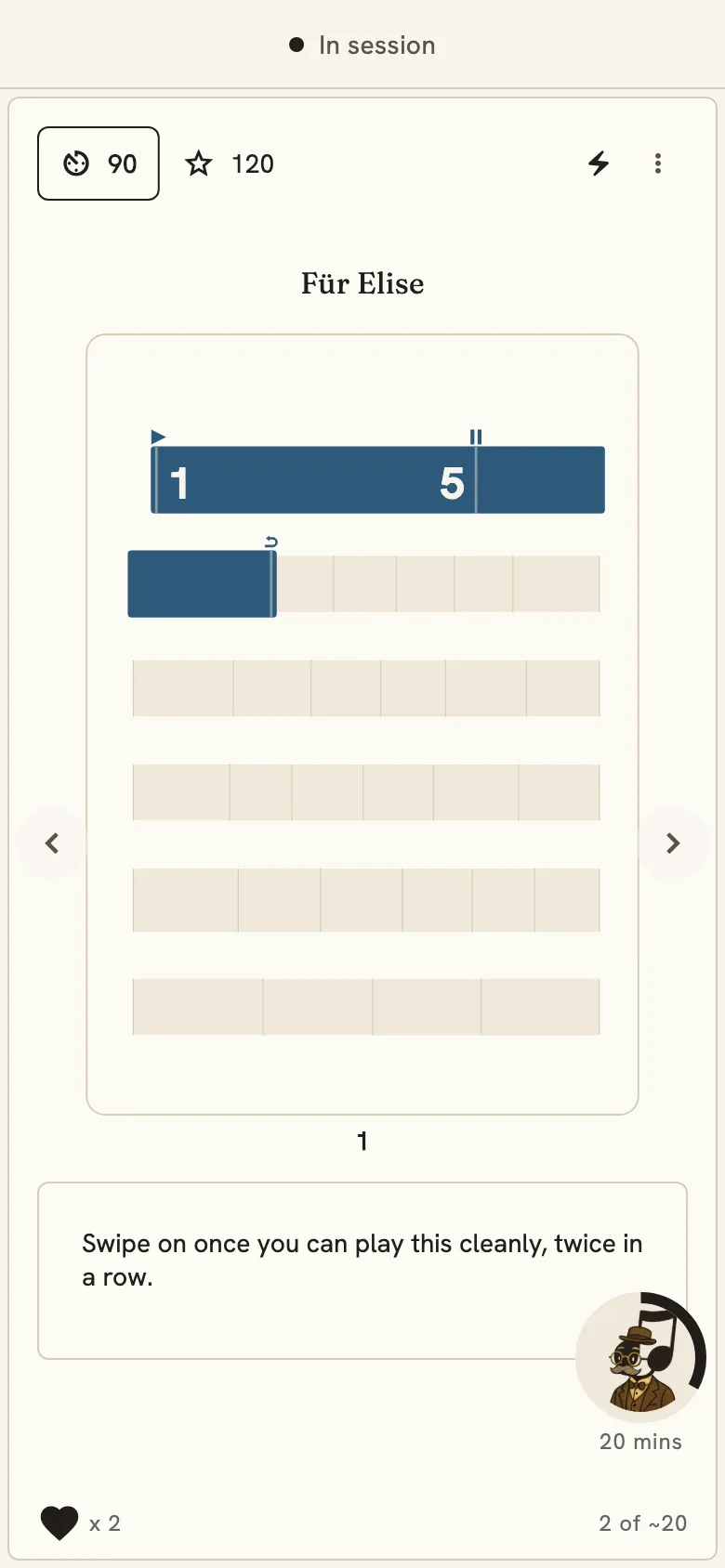
Small steps are easy to start and easy to finish. Each practice card names its bars, its target tempo and the thing to listen for, and the metronome keeps time with a count-in.
Swipe on when the step is clean, twice in a row. The plan takes it from there.
Four
Hard parts come back sooner
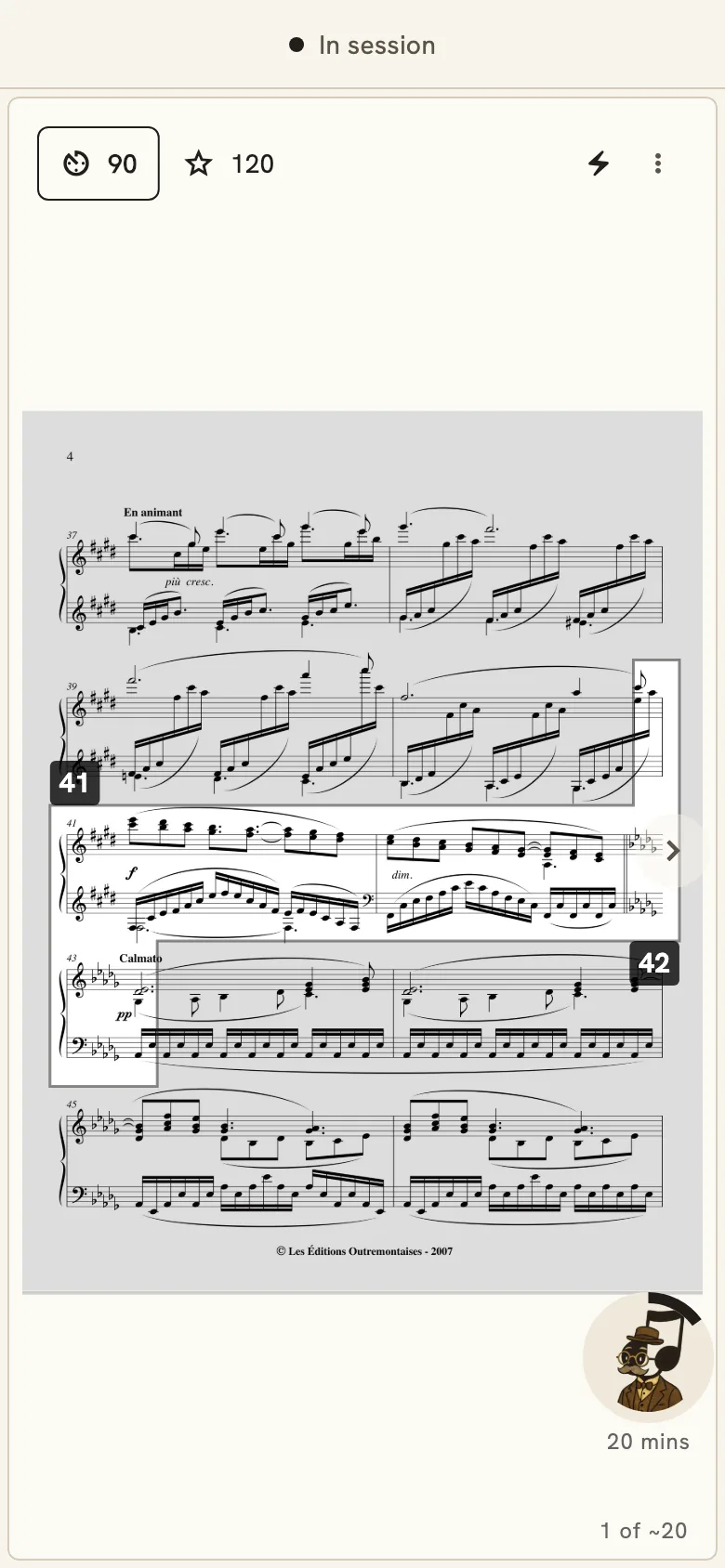
Each step records how it went. Parts that needed several attempts return before parts that were secure on the first.
A focus area takes the bars that keep returning and works on them alone, without losing the rest of the piece. When they are fixed, they go back into context.
Five
The record adds up
Every step leaves its mark, whether practised, secure or at tempo. The record is the state of the piece, bar by bar.
When the last step is done the plan finishes, and the piece stays in the library for refreshing. Nothing is lost between sessions, and nothing depends on remembering last week.
Principles
Three ideas from the research on practice
Deliberate practice
Work on the specific passage that is not yet working, slowly enough to observe and think.
Spaced retrieval
Bring material back after time away from it, so remembering has to do some work.
Isolation of difficulty
Take the hardest bars out of context, work on them alone, then put them back.
Quaverley turns these into the order of the steps. The plan holds the whole piece. The order is the part that adapts.

Start with the piece you have always wanted to play
7 days free. No card required.